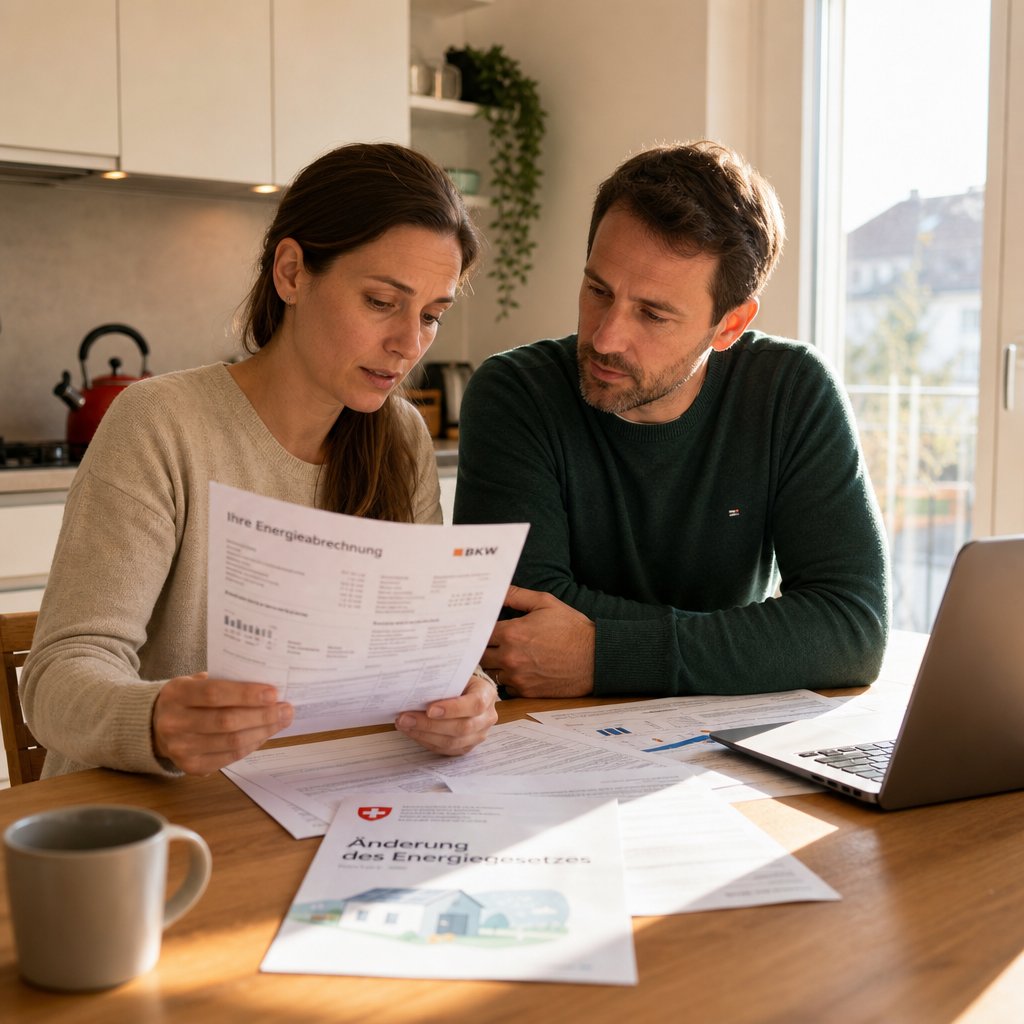
Confusion about Switzerland's new heating regulations is widespread. Search trends show sharp rises in queries like "electric heating ban Switzerland", "are electric heaters banned", and "which heaters are still legal". The reality is more nuanced — and more manageable — than the headlines suggest.
This article explains exactly what Switzerland's Climate Protection Act (KIG) says about electric heating, which systems are affected, the cantonal phase-out timeline, and the critical solar exception that keeps infrared panels fully legal.
What the Swiss Climate Protection Act (KIG) Actually Says
The Federal Climate Protection Act (Bundesgesetz über die Ziele im Klimaschutz, die Innovation und die Stärkung der Energiesicherheit — KIG) entered into force on 1 January 2025, following approval by Swiss voters in the June 2023 referendum.
The KIG establishes Switzerland's path to net-zero greenhouse gas emissions by 2050. For the heating sector, the core provision is this: fixed electric resistance heaters (ortsfeste elektrische Widerstandsheizungen) used as the primary heating source in residential buildings must be replaced with compliant alternatives at end of life, and new installations of this type are prohibited in most contexts.
Three words in that sentence carry enormous practical importance: fixed, resistance, and primary. The law is not a blanket prohibition on all electric heating. It specifically targets a particular technology (resistance heating, as opposed to heat pump or infrared), used in a particular configuration (as the main heating source), in a permanent installation. Portable heaters, supplementary heaters, and systems powered by renewable energy are all treated differently.
The KIG is not a ban on all electric heating. It restricts fixed electric resistance heaters as a primary heat source on grid electricity alone. Infrared panels powered by solar PV are explicitly exempt.
Which Heaters Are Affected?
Understanding which products fall within the KIG's scope is essential before making any decisions about your heating system.
Heaters Covered by the Restriction
Fixed electric storage heaters (Nachtspeicherheizungen): These large, heavy units — common in Swiss buildings from the 1960s to 1980s — use off-peak electricity to charge a thermal mass overnight and release it during the day. They are fixed, use resistance heating, and are typically the primary heat source. They fall directly within the KIG's scope.
Fixed electric panel heaters as primary heating: Older electric convective panels or baseboard heaters installed as the main heating system for a room or building, running purely on grid electricity, are within scope.
Fixed fan heaters used as primary heat source: Any fixed-installation electric fan heater serving as the primary heating system for a residential space is subject to the phase-out.
Heaters NOT Covered by the Restriction
Portable heaters: Any heater that is not permanently fixed to the building structure is outside the scope of the KIG's primary heating restrictions.
Towel rail heaters and bathroom heating: Electric towel rails and supplementary bathroom heaters are not classified as primary heating systems and are not subject to the restriction.
Sauna heaters: Not affected, as they serve a specific non-heating function.
Supplementary underfloor heating: Electric underfloor heating used as supplementary (not primary) heating is outside the KIG's direct restrictions.
Infrared panels combined with solar PV: This is the most important exemption for Swiss homeowners considering their options. Infrared panels powered by on-site solar energy are explicitly exempt from the phase-out under the solar exception clause. See the next section for details.
Cantonal Implementation Timeline
The KIG sets the federal framework, but implementation is handled at cantonal level through MuKEn 2025 (Mustervorschriften der Kantone im Energiebereich). Cantons have discretion over specific replacement deadlines, which typically apply when a heater reaches end of life or when a building undergoes major renovation.
| Canton | KIG Adoption Date | Deadline for Replacement |
|---|---|---|
| Zurich | January 2025 | December 2028 |
| Bern | January 2025 | December 2029 |
| Basel-Stadt | January 2025 | December 2027 |
| Geneva | January 2025 | December 2030 |
| Vaud | January 2025 | December 2030 |
| All other cantons | January 2025–2027 | 2028–2030 (staggered) |
These deadlines apply when the existing heater reaches end of life or when the building undergoes major renovation — not as immediate mandatory replacement dates. However, if your existing electric heating system is already 15+ years old, the end-of-life trigger may apply sooner than you think.
Basel-Stadt has the earliest cantonal deadline: December 2027. If you are in Basel and have an old Nachtspeicherheizung, planning your replacement now is advisable. Contact us for a free consultation: contact SunWave Switzerland.
The Solar Exception — How Infrared Remains Legal
This is the provision that changes everything for Swiss homeowners with solar potential — which, given Switzerland's roof stock, is the majority.
KIG Article 9 and MuKEn 2025 contain an explicit exception for electric heating systems powered by on-site renewable energy. The principle is straightforward: if your heating system is powered by electricity generated by your own solar PV installation, it is not classified as a "grid electricity resistance heater" in the conventional sense. It is a renewable-powered electric heating system — and it qualifies as compliant primary heating.
How the Exception Works in Practice
SunWave Ceramica panels installed in a building with a solar PV system — sized appropriately to cover a defined share of annual heating demand — constitute a fully KIG-compliant and MuKEn 2025-compliant primary heating system. There is no requirement to also install a heat pump or district heating connection.
The pairing also makes excellent economic sense. Infrared panels act as a highly flexible thermal load: they can be operated during periods of peak solar generation (midday), storing warmth in the ceramic mass and in the building's thermal envelope. This maximises solar self-consumption, reduces grid feed-in, and minimises the need to draw grid electricity for heating. For more on the solar pairing, visit SunWave for Solar Installers.
What About Buildings Without Solar?
Even without solar PV, infrared panels often qualify for additional exceptions under cantonal implementation of MuKEn 2025:
- Holiday homes and secondary residences: Exempted from primary heating restrictions in most cantons, as heating demand is intermittent and low-intensity.
- Listed heritage buildings (Schutzobjekte): Where structural modifications required for a heat pump installation would damage protected fabric, infrared panels are typically permitted.
- Supplementary heating: Infrared panels used as supplementary heating alongside a compliant primary system are fully permitted under any cantonal implementation.
If you are unsure whether your specific situation qualifies for an exception, consult a certified GEAK (Gebäudeenergieausweis der Kantone) energy advisor, who can assess your building and provide documentation for your cantonal energy office.
What Should You Replace Your Electric Heater With?
If your heating system does fall within the KIG's scope and a replacement is coming, you have several compliant options. The right choice depends on your building type, available space, and budget.
Heat Pump (Air-Source or Ground-Source)
Heat pumps are the Swiss government's preferred solution for residential buildings. They are highly efficient in well-insulated buildings (COP of 3–4 in normal conditions). However, they require significant installation work: an outdoor compressor unit, hydronic piping, a buffer tank, and typically an upgrade to the building's heating distribution system. Investment: CHF 35,000–52,000 for air-source; CHF 45,000–70,000 for ground-source.
District Heating (Fernwärme)
Where available, district heating from a local network is an excellent option — no on-site equipment, reliable, increasingly fed by renewable sources. The limitation is availability: only certain urban areas have district heating networks, and connection costs vary widely.
Infrared + Solar PV
For apartments, smaller buildings, and buildings where heat pump installation is impractical, infrared panels combined with rooftop solar PV are the lowest-cost compliant path. Total system cost for a 100 m² home: approximately CHF 4,720 for panels and installation, plus solar PV (which typically pays for itself independently through electricity savings and feed-in tariffs). This is 7–10× cheaper upfront than a heat pump, qualifies under the solar exception, and has zero maintenance costs.
For a full comparison of all alternatives, see: Replace Gas or Oil Heating in Switzerland 2026: Best Alternatives Compared.
Practical Steps for Swiss Homeowners
If you have an electric heating system and are uncertain about your obligations, here is a practical action plan:
Step 1: Identify your canton and deadline. Check whether your canton has adopted MuKEn 2025 and its specific replacement deadline (see table above). If in doubt, contact your cantonal energy office (Energiefachstelle).
Step 2: Assess your heater's age and condition. The replacement obligation is triggered at end of life or major renovation — not immediately. If your heater is relatively new and functioning, you may have several years before action is required. However, if it is 15+ years old or unreliable, proactive replacement now is advisable.
Step 3: Get a GEAK energy certificate. If you are planning any renovation, a GEAK (Gebäudeenergieausweis der Kantone) energy certificate is a valuable starting point. It documents your building's current energy state and identifies which improvements are most impactful.
Step 4: Assess your roof for solar potential. If your building has south-facing roof area, solar PV combined with SunWave Ceramica infrared panels is likely your fastest, cheapest path to compliance. Many Swiss cantons offer free initial solar assessments through their energy offices.
Step 5: Check funding availability. The Gebäudeprogramm (funded by the federal CO₂ levy) provides grants for heating system replacements in Switzerland. Heat pumps are the primary funded technology, but energy renovation packages that include infrared panels may qualify as part of a broader building improvement. Your cantonal energy office can advise on current funding rounds.
Step 6: Request a panel sizing quote from SunWave Switzerland. We can calculate the number of panels needed for your floor plan, estimated energy savings, and total investment. Contact us at sunwaveswitzerland.com/contact.
For a complete overview of infrared heating in Switzerland, see: Infrared Heating Switzerland: The Complete Guide 2026.
Frequently Asked Questions
Are electric heaters banned in Switzerland?
Not all electric heaters are banned. The Swiss Climate Protection Act (KIG), in force since January 2025, specifically restricts fixed electric resistance heaters used as the primary heating source in residential buildings. Portable heaters, supplementary heaters, and — crucially — infrared panels powered by on-site solar PV are exempt. The solar exception means infrared heating remains a fully legal primary heating system when combined with rooftop solar.
What heating systems are still allowed in Switzerland?
Under KIG 2025 and MuKEn 2025, the following systems are permitted as primary heating: air-source and ground-source heat pumps, district heating (where available), biomass/pellet systems, and electric heating systems powered by on-site renewable energy such as solar PV. Infrared panels combined with solar PV are fully compliant.
Do I need to replace my electric heater immediately?
No. The replacement obligation under KIG 2025 applies at end of life or when a building undergoes major renovation — not immediately. Cantonal implementation deadlines vary between 2027 and 2030. However, if your heater is already old or you are planning any renovation works, it is worth planning your replacement now to take advantage of available grants and avoid rushed decisions.
Is infrared heating banned in Switzerland?
No. The Climate Protection Act (KIG) and MuKEn 2025 target fixed electric resistance heaters used as the sole primary heating system — not infrared panels as such. Infrared heaters used as supplementary, zone, or transitional heating are unaffected by the restrictions. When combined with a solar PV system that generates at least 10% more electricity than the heater consumes (the solar exception), infrared heating remains fully compliant even as a primary heating system. The confusion usually arises because "electric heating" and "infrared heating" are mistakenly treated as the same thing — legally and technically, they are different cases.
Is infrared heating carcinogenic or a health risk?
No. The independent Fraunhofer Institute WKI tested SunWave Ceramica panels in operation for chemical emissions (Report MAIC-2022-2428). Total VOC emissions measured 0.043 mg/m³ — just 0.43% of the regulatory limit of 10 mg/m³. No carcinogenic compounds were detected, including formaldehyde, benzene, and toluene. Because infrared panels are purely electric with no combustion, there are also no combustion byproducts or CO. Full test documentation is available in our research section.
Is there a fire risk with infrared heating panels?
No, the risk is minimal with certified devices. The independent Labor S.A. tested SunWave Ceramica panels to EN 60335-2-30: surface temperature rise measured 71.2 K — within the 80 K limit — and leakage current was just 0.1 mA (limit: 0.25 mA). The panels are built to Class II (double-insulated) standards, requiring no separate protective earth. As with any electrical appliance, installation by a licensed electrician, adequate clearance from combustible materials per manufacturer specifications, and use of the included thermostat further minimize any residual risk.
Is your heating system compliant?
SunWave Ceramica + solar PV — the lowest-cost path to KIG compliance. From CHF 550/panel incl. thermostat. Free consultation available.
Book a Free Consultation →